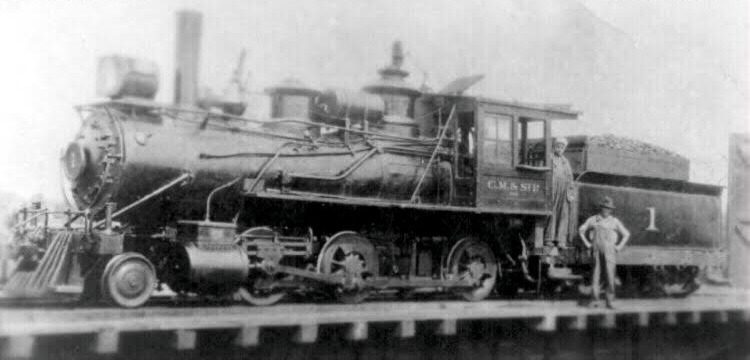
The Chicago, Milwaukee & St. Paul narrow-gauge railroad was, in its day, one of Cascade's historic claims to fame. Though long dismantled, in its heyday from 1880 to 1936 it was the chief transportation network connecting Cascade, Bellevue, and every town in between.
A narrow-gauge railroad is defined as a railway with a gauge narrower than the standard 4 feet, 8½ inches. Most narrow-gauge lines run between about 2 and 3½ feet. They're usually less expensive to build, with tighter curves, smaller structure gauges, and lighter rails — often serving industries and sparsely populated communities where the traffic potential wouldn't justify a standard- or broad-gauge line.
A Chicago line ran through Dubuque, Dyersville, and Monticello, and most communities with rail service were starting to grow and prosper. Cascade, stuck behind, couldn't seem to get any railroad service of its own. So local businesspeople and civic leaders built the narrow-gauge line running between Bellevue and Cascade, with stops at La Motte, Zwingle, Bernard, and Fillmore. At the terminus in Cascade, a turntable swung the train around to head back.
The top speed was only twelve miles an hour, but it served its purpose — efficient travel and connection between the towns for many years. Beyond cargo for the general stores, the train carried passengers too; a big day for some people meant leaving Cascade for Bellevue. Smaller communities along the route relied on the train for goods, since freight came down from Dubuque on the regular St. Paul Chicago line and transferred at Bellevue — there was no highway system back in 1880–1900.
Eventually the railroad declined with the advent of cars and trucks that could use the newly constructed roads. As US Highway 151 became paved, one could drive a truck straight from Cascade to Bernard to Dubuque. Shipment by rail became less reliable as revenues dried up, and merchants and passengers alike turned to newer forms of transportation.
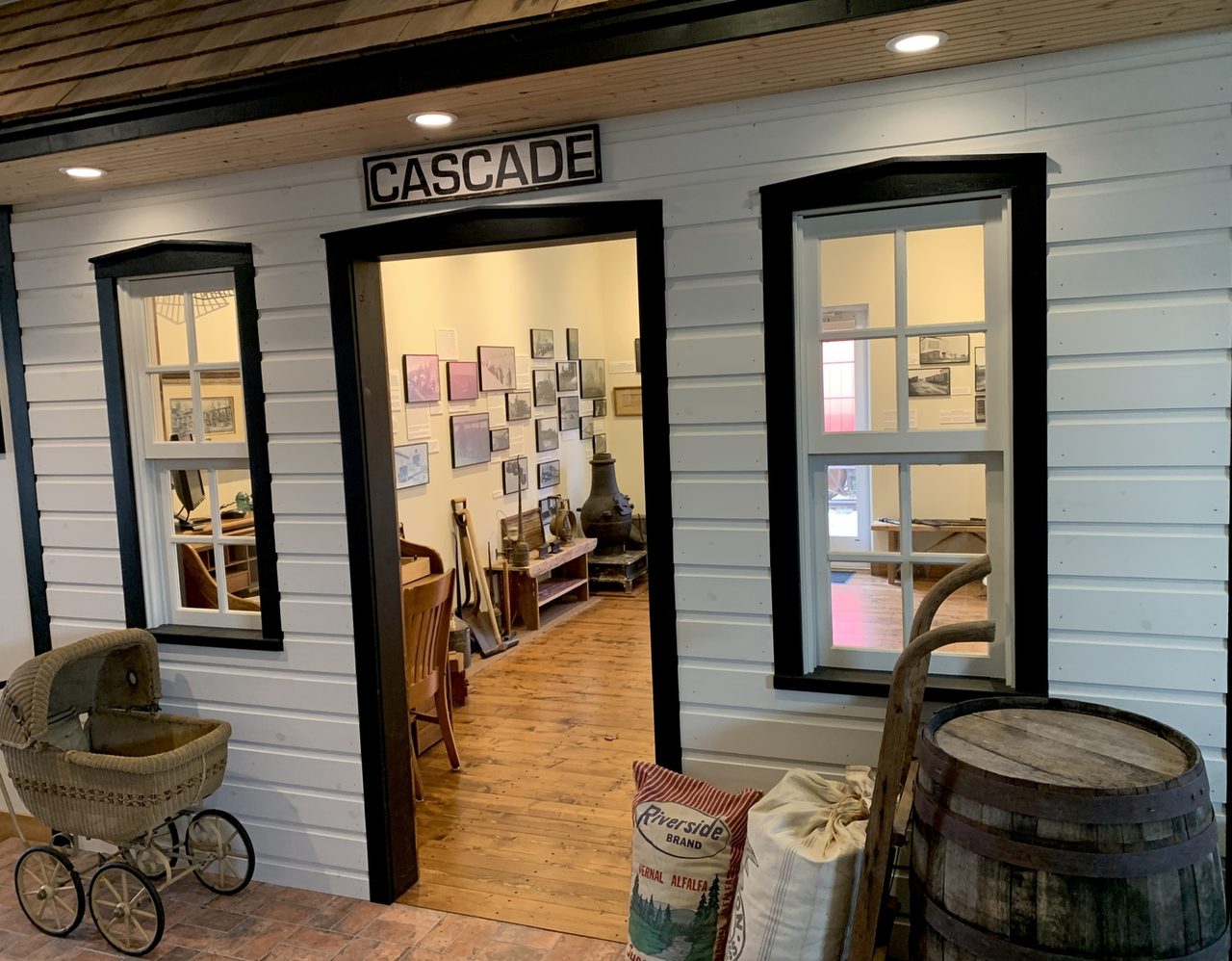
During its fifty-plus year history, the little railroad went through name changes and changes in ownership. Its full history contains too much to cover here, so we invite all lovers of rail history — casual or hardcore — to come see the significant display we have at the museum.
It's worth the ride.